Understanding betting terms makes it easier to choose the right market and know how each wager works. This glossary explains common bet types, markets, strategies, odds and other essential betting terminology in simple terms.
Key Takeaways
- Single bets cover one selection, while multiples combine several selections
- Combination bets such as Yankees, Trixies and Lucky 15s spread stakes across multiple outcomes
- Core markets include moneyline, spreads, totals, handicaps and double chance
- Football markets cover goals, corners, cards, scorers and match results
- Racing bets include win, place, forecast, exacta, trifecta and tote betting
- Live betting allows wagers after an event starts, with odds changing during play
- Betting systems include Martingale, Fibonacci, Kelly Criterion and bankroll management
Single, Multiple & Combination Bets
Single, multiple and combination bets differ mainly in how selections are grouped and how many outcomes need to win. The following terms explain the most common formats, from simple single bets to larger combination systems.
What is a single bet?
A single bet is a wager placed on the outcome of just one selection or event. It’s the simplest bet type in sports betting: if your selection wins, the bet pays out at the odds offered; if it loses, the stake is lost. Every other bet type on this list is essentially several singles combined into one wager.
What is a Double Bet?
A double bet combines two separate selections into a single wager, where both selections must win for the bet to pay out. The winnings from the first selection roll over as the stake on the second, multiplying the odds together for a bigger potential return than two singles — but if either selection loses, the whole bet loses.

What is a Treble Bet?
A treble bet links three selections into one wager, and all three must win for a payout. The odds of each selection multiply together, so the potential return is higher than placing the picks as singles or doubles — but a single losing leg loses the entire bet.
What is a Four-Fold Accumulator?
A four-fold accumulator is a single bet made up of four selections, all of which need to win for the bet to pay out. It works the same way as a double or treble, just with one more leg, and the odds of all four selections multiply together to produce a much larger potential payout from a small stake.
What is an Accumulator (Acca) Bet?
An accumulator, or “acca,” is a single bet that combines four or more selections, with every selection needing to win for the bet to pay out. In the US, the same bet is called a parlay bet. Because the odds of each leg multiply together, accumulators offer big potential returns from small stakes, but the risk grows with every selection added.
What is a Same Game Parlay (SGP)?
A same game parlay (SGP) is an accumulator made up of multiple selections from a single match, such as the correct score, both teams to score, and a player to score, all combined into one bet. All the linked selections must win for the bet to pay out, and online bookmakers adjust the odds to account for how the outcomes relate to each other.
A teaser bet is a US-style parlay that lets you adjust the point spread or total on each selection in your favor, in exchange for reduced odds. A 6-point teaser, for example, might move a -7 spread to -1, making the bet easier to win but paying out less than a standard parlay would.
What is a Pleaser Bet?
A pleaser bet is the opposite of a teaser: it moves the point spread or total against you on every selection, making the bet harder to win in exchange for significantly higher odds. Pleasers are a high-risk, high-reward variation aimed at bettors chasing a bigger payout from a parlay-style wager.
What is an If Bet (And a Reverse Bet)?
An if bet is a wager where the stake on a second selection is only placed if the first selection wins, letting you chain bets together without risking the full amount on every leg upfront. A reverse bet doubles this up by running the sequence both ways, so a win on either selection can trigger a payout from both directions.
What is a Round Robin Bet?
A Round Robin bet takes three or more selections and automatically combines them into every possible double, treble, and higher combination, minus the single bets. It spreads risk across multiple combinations, so you can still get a return even if not every selection wins.
What is a Trixie Bet?
A trixie bet uses three selections to create four bets: three doubles and one treble. At least two of your three selections need to win for the bet to return anything, which makes it a popular choice for bettors who want a safety net if one leg lets them down.

What is a Yankee Bet?
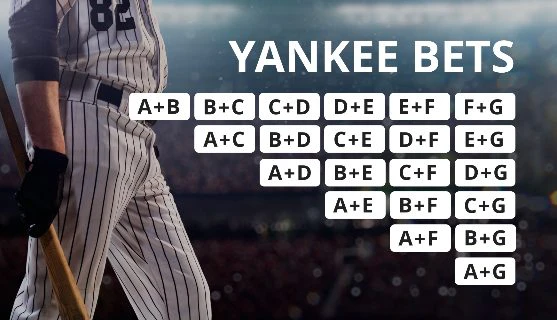
A yankee bet uses four selections to create eleven bets: six doubles, four trebles, and one four-fold accumulator. Just two of the four selections need to win for a return, spreading risk further than a trixie while still rewarding a clean sweep with a much larger payout.
What is a Canadian Bet?
A canadian bet, also called a super yankee, uses five selections to create 26 bets: ten doubles, ten trebles, five four-folds, and one five-fold accumulator. It needs a larger stake than a yankee since it covers more combinations, but it rewards even partial success across the five picks.
What is a Patent Bet?
A patent bet uses three selections to create seven bets: three singles, three doubles, and one treble. Because it includes singles, a patent will return a profit even if only one of the three selections wins, making it one of the safer multiple bet types.
What is a Lucky 15 Bet?
A lucky 15 bet uses four selections to create 15 bets: four singles, six doubles, four trebles, and one four-fold accumulator. Many bookmakers offer bonuses on lucky 15s, such as double odds if only one selection wins, which softens the blow when the bet doesn’t come in fully.
What is a Lucky 31 Bet?
A lucky 31 bet uses five selections to create 31 bets: five singles, ten doubles, ten trebles, five four-folds, and one five-fold accumulator. It follows the same “lucky” format as a lucky 15, covering every possible combination of the five selections so a return is possible even without a clean sweep.
What is a Lucky 63 Bet?
A lucky 63 bet uses six selections to create 63 bets, covering every single, double, treble, four-fold, five-fold, and the full six-fold accumulator. It’s the largest of the “lucky” bets, giving maximum coverage across six picks at the cost of a proportionally larger total stake.
What is a Heinz Bet?
A heinz bet uses six selections to create 57 bets: 15 doubles, 20 trebles, 15 four-folds, six five-folds, and one six-fold accumulator. Unlike a lucky 63, a heinz doesn’t include the six singles, so at least two selections need to win before it returns anything.
What is a Super Heinz Bet?
A super heinz bet uses seven selections to create 120 bets, covering every double through seven-fold combination without the singles. It’s a step up from a heinz, adding a seventh selection and dramatically increasing both the number of combinations and the total stake required.
What is a Goliath Bet?
A goliath bet uses eight selections to create 247 bets, covering every double, treble, four-fold, five-fold, six-fold, seven-fold, and the full eight-fold accumulator. It’s one of the largest standard multiple bets available, offering extensive coverage across eight picks for bettors willing to stake a correspondingly large amount.
What is an Alphabet Bet?
An alphabet bet combines six selections into 26 total bets: two patents covering the outer selections, a yankee covering the middle four, and a six-fold accumulator across all six. It’s built for bettors who want returns even if several selections lose, while still rewarding a full clean sweep with a big accumulator payout.
What is a Union Jack Bet?
A union jack bet arranges nine selections into a 3×3 grid and bets on every line that can be drawn across it — three rows, three columns, and two diagonals — creating eight treble bets in its basic form. More complex versions swap the trebles for doubles, singles, or round robins, but the grid layout stays the same.
What is a System Bet?
A system bet, also called a perm or permutation bet, lets you choose how many selections need to win out of a larger group for the bet to pay out — for example, a “4 from 6” system pays out if any four of your six selections win. It’s a flexible way to build coverage across multiple selections without committing to a fixed format like a yankee or heinz.
Core Bet Markets
Core betting markets cover the most common ways to predict the outcome of a sporting event. These include match winners, spreads, totals, handicaps and several popular alternatives.
What is a Moneyline Bet?
A moneyline bet is a wager on which side will simply win a game or match outright, with no point spread involved. Odds are set based on each side’s perceived chance of winning: favorites carry negative odds (risk more to win less) and underdogs carry positive odds (risk less to win more).
What is a Point Spread Bet?
A point spread bet, also called spread betting, handicaps the favorite by a set number of points so both sides have a roughly equal chance against the number. Betting the favorite means they need to win by more than the spread, while betting the underdog means they can lose by less than the spread and still win the bet.
What is a Totals (Over/Under) Bet?
A totals bet, or over/under, is a wager on whether the combined score of both teams will be higher or lower than a number set by the bookmaker. It doesn’t matter which team wins — only whether the total points, goals, or runs scored finish above or below the posted line.
What is a Handicap Bet?
A handicap bet gives one side a virtual head start or deficit before a match begins, evening out a mismatch between two competitors. A team starting on a -1 handicap needs to win by two or more clear goals for the bet to pay out, while a team on +1 only needs to avoid losing by more than one goal.
What is an Asian Handicap Bet?
An asian handicap bet eliminates the draw as a betting outcome by applying a handicap in quarter- or half-goal increments, such as -0.5 or -1.5. Because the handicap can’t land exactly on a whole number, every asian handicap bet resolves as either a win or a loss, never a push.
What is Draw No Bet?
Draw no bet is a wager on which team will win a match, with the draw removed as a betting outcome. If the match ends level, the bet is voided and the stake is fully refunded, making it a lower-risk alternative to a straight match-winner bet.
What is a Double Chance Bet?
A double chance bet covers two of the three possible outcomes in a match at once — such as “home win or draw,” “away win or draw,” or “home win or away win.” It pays out if either of the covered outcomes happens, trading a lower payout for a much higher chance of winning.
What is an Each Way Bet?
An each way bet splits your stake into two equal parts: one bet on your selection to win outright, and one bet on it to finish in a specified placed position. It returns a smaller profit if your selection places but doesn’t win, and the full payout on both parts if it wins outright.
What is a Forecast Bet?
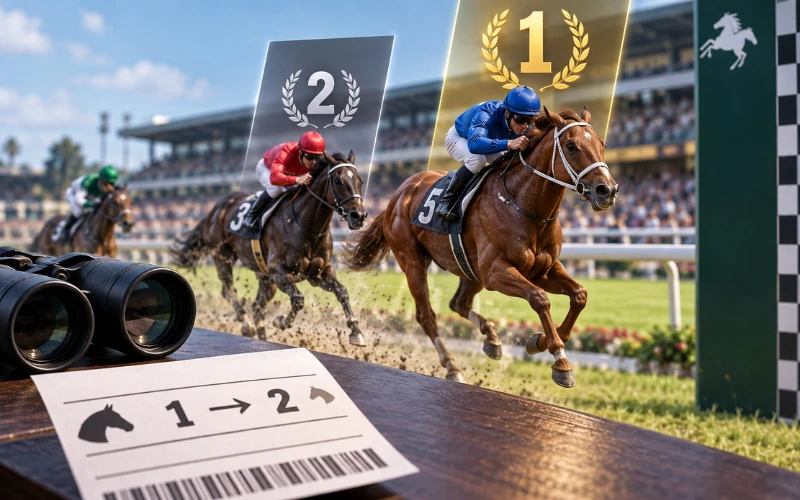
A forecast bet requires picking the first and second place finishers in a race, in the exact correct order. It’s most common in horse and greyhound racing, and pays out at odds that reflect how likely that precise 1-2 finish was to happen.
What is a Tricast Bet?
A tricast bet requires picking the first, second, and third place finishers in a race, in the exact correct order. It’s a step up from a forecast bet, covering one more finishing position, and typically pays out at much longer odds because of how specific the outcome has to be.
What is a Correct Score Bet?
A correct score bet requires predicting the exact final score of a match, such as 2-1 or 0-0. It offers some of the highest odds in football betting because there are dozens of possible scorelines, making it a difficult but potentially lucrative single bet.
What is a First Goalscorer Bet?
A first goalscorer bet is a wager on which player will score the opening goal of a match. If the game ends 0-0, or if the named player doesn’t play, the bet typically loses, though some bookmakers offer a partial refund if the player doesn’t take part.
What is a Win Both Halves Bet?
A win both halves bet requires a team to be ahead at half-time and to also win the match outright, meaning they need to lead in both halves without being pulled back. It’s a tougher variation of a straight match-winner bet, and pays out at correspondingly higher odds.
What is a Head to Head Bet?
A head to head bet asks you to pick which of two competitors will finish ahead of the other, independent of the overall result of the event. It’s common in golf, motorsport, and athletics, where two named players or drivers are matched against each other within a larger field.
What is Dutching?
Dutching is a staking method where you back multiple selections in the same event, splitting your stake across them so that you win roughly the same amount regardless of which one comes in. It’s used to cover several possible outcomes in a race or match without needing to pick just one winner.
What is Pari-Mutuel Betting?
Pari-mutuel betting pools all stakes placed on an event together, and pays out winners a share of that pool after the operator takes a cut, rather than at fixed odds agreed in advance. It’s the standard model for tote betting on horse racing, where the final payout depends on how much money went on each outcome.
Football (Soccer) Specific Markets
Football betting offers a wide range of markets beyond simply predicting the match winner. These terms cover popular options based on goals, corners, cards, scorers and match results.
What is Both Teams to Score (BTTS)?
Both teams to score (BTTS) is a bet on whether both sides in a match will score at least one goal each, regardless of the final result. It’s settled purely on whether both teams found the net, so a 1-1 draw and a 3-2 win both count as a “yes” for BTTS.
What is an Anytime Goalscorer Bet?
An anytime goalscorer bet is a wager on a named player to score at any point during the match, in contrast to a first goalscorer bet which only counts the opening goal. It pays out as long as the player scores at least once, however many other goals are scored around it.
What is a Clean Sheet Bet?
A clean sheet bet is a wager on a team to prevent their opponent from scoring at all during the match. It pays out if the final score shows zero goals against that team, regardless of how many goals they score themselves.
What is a Half-Time/Full-Time (HT/FT) Bet?
A half-time/full-time bet requires correctly predicting both the result at half-time and the result at full-time, such as “away team leading at half-time, home team winning at full-time.” Because it combines two separate results into one prediction, it offers much higher odds than betting on the full-time result alone.
What is a Win to Nil Bet?
A win to nil bet requires a team to both win the match and keep a clean sheet, combining a match-winner bet with a clean sheet bet. If the team wins but concedes a goal, or fails to win at all, the bet loses.
What is a Total Corners Bet?
A total corners bet is a wager on the combined number of corner kicks awarded in a match, settled over or under a line set by the bookmaker. It’s a popular alternative to goal-based markets for bettors who follow a team’s attacking style rather than just the scoreline.
What is a Total Cards (Bookings) Bet?
A total cards, or bookings, bet is a wager on the combined number of yellow and red cards shown in a match, settled over or under a line set by the bookmaker. Referees’ card counts and rivalry fixtures both tend to influence how this market is priced.
What is a European Handicap Bet?
A european handicap bet applies a virtual head start or deficit to a team while keeping the draw as a possible outcome, unlike an asian handicap which removes it. A team on a -1 european handicap can still “win” the bet if a draw on the actual scoreline becomes a win once the handicap is applied.
Horse & Greyhound Racing Bets
Horse and greyhound racing have their own set of betting terms and combination wagers. The following definitions explain common win, place, forecast and pool-based bets used across racing markets.
What is a Win Bet?
A win bet is a wager on a single horse or greyhound to finish first in a race. It’s the simplest and most common racing bet, paying out only if your selection crosses the line in first place.
What is a Place Bet?
A place bet is a wager on a horse or greyhound to finish within a specified number of top positions, typically the top two or three depending on the size of the field. It pays out at lower odds than a win bet, but gives more ways for the bet to succeed.
What is a Show Bet?
A show bet, a term used mainly in US horse racing, is a wager on a horse to finish in the top three. It’s the safest of the standard win/place/show bets, offering the smallest payout in exchange for the highest chance of winning.
What is a Quinella Bet?
A quinella bet requires picking the two horses or greyhounds that will finish first and second in a race, in either order. It’s similar to an exacta, but doesn’t require getting the exact 1-2 finishing order right, which makes it easier to win but typically pays less.
What is an Exacta (Perfecta) Bet?
An exacta bet, also called a perfecta, requires picking the first and second place finishers in a race in the exact correct order. Getting the order right is harder than a quinella, so exactas generally pay out at higher odds for the same two selections.
What is a Trifecta Bet?
A trifecta bet requires picking the first, second, and third place finishers in a race, in that exact order. It’s one of the more difficult standard racing bets, and rewards that difficulty with significantly bigger payouts than a win, place, or exacta bet.
What is a Superfecta Bet?
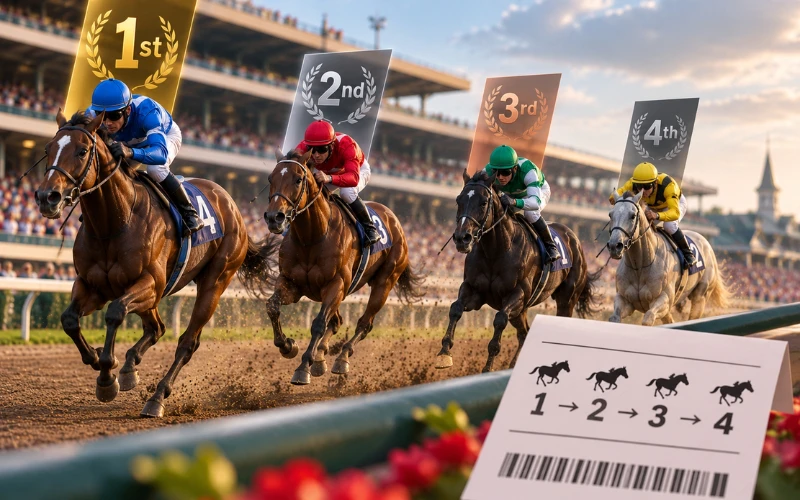
A superfecta bet requires picking the first four finishers in a race, in the exact correct order. It’s one of the hardest common racing bets to land, and can produce very large payouts from a relatively small stake when it comes in.
What is a Daily Double Bet?
A daily double bet requires picking the winners of two specific, consecutive races on the same card. Both legs have to win for the bet to pay out, similar to a two-leg accumulator applied specifically to racing.
What are Pick 3, Pick 4, Pick 5, and Pick 6 Bets?
Pick 3, pick 4, pick 5, and pick 6 bets extend the daily double concept further, requiring you to correctly pick the winners of three, four, five, or six consecutive races respectively. The more races included, the harder the bet is to land and the larger the potential payout, since these pools often carry over when nobody hits the full sequence.
What is a Boxed Bet?
A boxed bet covers every possible finishing order for a group of selections in bets like exactas, trifectas, and superfectas, rather than requiring one specific order. Boxing a bet multiplies the total cost by the number of order combinations it now covers, but removes the need to predict the exact sequence.
What is Tote Betting?
Tote betting is pari-mutuel wagering on horse racing, where all stakes on a race are pooled together and winners share that pool after the tote operator takes a percentage. Payouts depend on how much money went into the pool and how many other bettors backed the same outcome, rather than on fixed odds agreed before the race.
Props, Futures & Specialty Bets
Props, futures and specialty bets focus on specific events, long-term outcomes or unique aspects of a sporting contest. They can range from player performances to tournament winners and fight outcomes.
What is a Prop Bet?
A prop bet, short for proposition bet, is a wager on a specific occurrence within a game that doesn’t depend on the final result, such as a player’s total points or which team scores first. Player props focus on individual performance, team props focus on team-level stats, and exotic props cover unusual or novelty occurrences, like the length of the national anthem.
What is a Futures Bet?
A futures bet is a wager placed on a long-term outcome that won’t be decided until well after the bet is made, such as a team to win a championship, a division, or a season-long award. Odds shift throughout the season as form changes, and the bet is only settled once the outcome is finally confirmed.
What is an Outright Bet?
An outright bet is a wager on who will win an entire tournament, league, or competition, rather than a single match or event within it. It’s essentially the umbrella term for a futures bet on the overall winner, and the stake is tied up until the competition concludes.
What is a Method of Victory Bet?
A method of victory bet, common in combat sports like boxing and MMA, is a wager on how a fight will end — such as by knockout, submission, or judges’ decision — combined with which fighter wins. It pays out only if both the winner and the specific method are correct.
What is Round Betting (Total Rounds)?
Round betting, or total rounds, is a wager on how long a boxing or MMA fight will last, either as an over/under on the total number of rounds completed or a bet on the exact round in which the fight will end. It’s a specialty market that focuses purely on fight duration rather than the outcome.

What is Group Betting in Golf?
Group betting in golf is a wager on which player will finish with the best score among a small named group of golfers, rather than the whole field. It gives bettors a way to back a favored player’s relative form without needing them to win the tournament outright.
What is a “Race to” Bet?
A “race to” bet is a wager on which side will be the first to reach a specified number of points or games in a match, such as “race to 10 points” in basketball or “race to 4 games” in tennis. It focuses on early momentum rather than the final result of the match.
What is Middle Betting?
Middle betting is a strategy of betting both sides of the same game at different point spreads or totals, aiming for the final result to land in the narrow “middle” gap between the two numbers so that both bets win. If the result falls outside that middle, only one side of the bet wins, limiting the downside to a small net loss.
What is Exchange Betting?
Exchange betting lets bettors wager directly against each other rather than against a bookmaker, with one side “backing” an outcome and the other “laying” it. The exchange itself doesn’t set the odds — it matches opposing bettors and takes a small commission on winnings.
What is a Bet Builder?
A bet builder lets you combine multiple selections from within a single match — such as the result, both teams to score, and a player to score — into one bet with combined odds, similar to a same game parlay. It gives bettors more control over exactly which outcomes they want to bet on in one game.
Live / In-Play Betting
Live betting takes place after an event has started, with markets and odds changing as the action develops. These terms explain the main features associated with betting during a live event.
What is Live (In-Play) Betting?
Live betting, or in-play betting, lets you place wagers on a match after it has already started, with odds updating continuously as the action unfolds. It covers everything from the eventual result to short-term markets like the next team to score or the outcome of the next few minutes of play.
What is Cashout in Betting?
Cashout is an option that lets you settle a bet before the event has finished, locking in a profit early or limiting a loss, based on a price the bookmaker offers in real time. The cashout value reflects how likely your bet is to win at that moment, adjusted for the bookmaker’s margin.
Betting Systems & Strategies
Betting systems and strategies use different approaches to selecting bets, setting stakes and managing a bankroll. The following terms cover popular staking systems as well as methods used to assess betting value and risk.
What is the Martingale Betting System?
The martingale system is a staking strategy where you double your stake after every loss, so that a single win recovers all previous losses plus a profit equal to your original stake. It requires a large bankroll to survive a losing streak and can hit betting limits before it pays off, which is why it’s considered high-risk.
What is the Paroli System (Reverse Martingale)?
The paroli system, also called the reverse martingale, increases your stake after a win instead of after a loss, typically doubling it for a set number of consecutive wins before resetting to the base stake. It aims to press winning streaks for bigger gains while keeping losses limited to the original stake amount.
What is the Fibonacci Betting System?
The fibonacci betting system increases your stake after a loss by following the fibonacci sequence (1, 1, 2, 3, 5, 8…), moving one step forward after a loss and two steps back after a win. It rises more gradually than the martingale system, aiming to recover losses over a longer series of bets rather than in a single wager.
What is the D’Alembert Betting System?
The d’alembert system increases your stake by one unit after a loss and decreases it by one unit after a win, rather than doubling or following a sequence. It’s a gentler progression than martingale or fibonacci, designed to slowly balance out wins and losses over time.

What is the Labouchere Betting System?
The labouchere system starts with a written sequence of numbers representing units to stake, where each bet’s size is the first and last number in the sequence added together. A win crosses off those two numbers, while a loss adds the lost amount to the end of the sequence, and the goal is to cross off every number in the line.
What is Oscar’s Grind?
Oscar’s grind is a slow, positive progression staking system where you increase your stake by one unit after a win and keep it the same after a loss, aiming to grind out a profit of exactly one unit before starting the cycle again. It’s designed to limit losses during cold streaks rather than chase big recoveries.
What is the Kelly Criterion?
The kelly criterion is a staking formula that calculates the ideal percentage of your bankroll to wager based on the odds available and your estimated true probability of winning. Bets with a bigger perceived edge get a larger stake under the formula, while bets with little or no edge get little or nothing, aiming to grow a bankroll as efficiently as possible over time.
What is Arbitrage Betting (Arbing)?
Arbitrage betting, or arbing, exploits differences in odds between bookmakers by backing every possible outcome of an event across different sites, guaranteeing a small profit regardless of the result. It requires fast execution and enough spread across bookmakers to find the pricing gaps before they close.
What is Matched Betting?
Matched betting uses free bets and sign-up bonuses from bookmakers, paired with an opposite “lay” bet on a betting exchange, to lock in a profit or extract the value of the bonus with little to no risk. It’s a technique built specifically around turning bookmaker promotions into cash rather than betting on outcomes for their own sake.
What is Value Betting?
Value betting means placing a bet only when you believe the odds on offer are higher than the true probability of that outcome happening, giving you a mathematical edge over the long run. It shifts the focus from simply picking winners to comparing your own probability estimate against the bookmaker’s price.
What is Bankroll Management?
Bankroll management is the practice of setting rules for how much of your total betting funds to stake on any single bet, protecting you from ruin during a losing streak. Common approaches include staking a fixed percentage of your bankroll per bet or using a fixed unit size that only changes as the bankroll grows or shrinks.
What is Unit Betting?
Unit betting expresses stakes as a percentage of your total bankroll (a “unit”) rather than a fixed cash amount, so a bet described as “2 units” scales automatically as your bankroll changes. It’s a bankroll management tool that keeps stake sizes proportional and consistent regardless of how much money you started with.

What is Flat Betting?
Flat betting means staking the same fixed amount, or the same fixed percentage of your bankroll, on every single bet regardless of how confident you are in it. It’s one of the simplest bankroll management approaches, avoiding the swings that come with increasing or decreasing stakes based on results.
What is Hedging in Betting?
Hedging means placing a bet on the opposite outcome of an existing wager to guarantee a profit or reduce a potential loss, regardless of which side ultimately wins. It’s commonly used on multi-leg bets or futures wagers that are close to a big payout, letting a bettor lock in some return rather than risk losing everything.
What is Closing Line Value (CLV)?
Closing line value (CLV) measures whether the odds you bet at were better than the odds available right before the event started (the “closing line”). Consistently beating the closing line is considered one of the strongest indicators of long-term betting skill, since it shows you’re finding value before the market corrects.
What is Line Shopping?
Line shopping means comparing the odds on the same bet across multiple bookmakers before placing it, in order to get the best available price. Even small differences in odds add up significantly over many bets, which is why serious bettors typically hold accounts with several bookmakers.
What does it Mean to Fade the Public?
Fading the public means deliberately betting against the side that’s receiving the majority of public bets, on the theory that heavy public action can push a line further than the true probability justifies. It’s a contrarian strategy built on the idea that bookmakers sometimes shade lines to balance action rather than to reflect pure probability.
What does it Mean to Create Your Own Betting Lines?
Creating your own betting lines means independently estimating the odds or probability of an outcome before looking at the bookmaker’s price, then comparing the two to spot value. If your own line suggests an outcome is more likely than the bookmaker’s odds imply, that gap is where a potential edge lies.
What is Handicapping in Betting?
Handicapping is the process of analyzing all the factors that could affect an event’s outcome — form, injuries, matchups, weather, and more — to arrive at your own assessment of each side’s chances. It’s the research and analysis work that underpins strategies like value betting and creating your own lines.
General Betting Terms
General betting terminology covers the basic language used across bookmakers and betting markets. These terms explain odds, stakes, payouts, bet status, bookmakers and other concepts that appear regularly when placing bets.
What are Betting Odds?
Betting odds represent both the probability a bookmaker assigns to an outcome and how much a winning bet will pay out. They’re displayed in decimal, fractional, or American format depending on the region and bookmaker, but all three express the same underlying price in different ways.
What is Implied Probability?
Implied probability converts betting odds into a percentage chance of an outcome happening, according to the bookmaker’s price. Comparing implied probability to your own estimate of how likely an outcome really is forms the basis of value betting.
What is Vig (Juice/Vigorish) in Betting?
Vig, also called juice, vigorish, or overround, is the built-in commission a bookmaker charges by pricing all outcomes of a market so their implied probabilities add up to more than 100%. It’s how bookmakers make a profit regardless of the result, and it’s why finding true value means beating that built-in margin.
What is a Bookmaker (Sportsbook)?
A bookmaker, or sportsbook, is a company that sets odds on sporting events and accepts bets on the outcomes. The terms are largely interchangeable, though “bookmaker” is more common in the UK and “sportsbook” is the standard US term.
What is a Wager?
A wager is simply another word for a bet — an amount of money staked on the outcome of an event in the hope of a payout if it’s correct. The term is used interchangeably with “bet” across betting markets worldwide.
What does “Action” Mean in Betting?
Action refers to any bet that’s currently live and counts toward the outcome, or more broadly to betting activity itself, as in “there’s a lot of action on this game.” A bet with “no action” is voided and the stake returned, because it didn’t officially count.
What is a Push in Betting?
A push happens when a bet lands exactly on the number set by the bookmaker, such as a point spread or total, resulting in a tie with no winner or loser. When a bet pushes, the original stake is simply returned in full.
What is a Bet Slip?
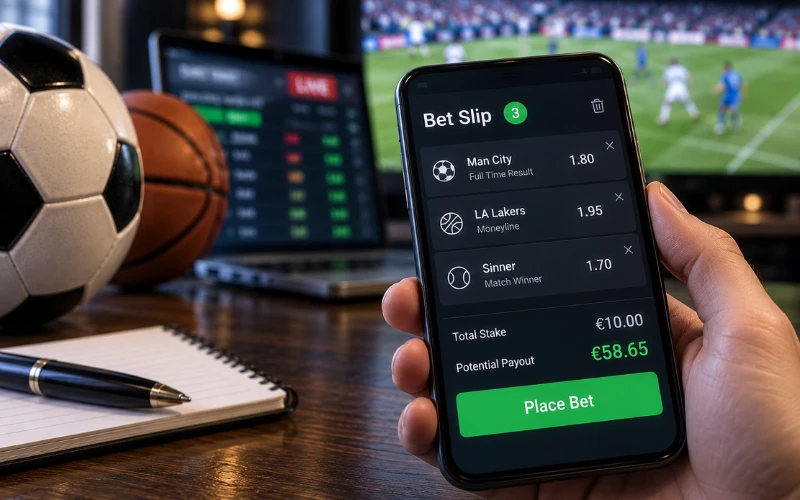
A bet slip is the summary, whether printed or digital, that lists your selections, stake, and potential payout before you confirm a wager. On betting apps and websites, it’s the running list of selections you build before placing the bet.
What is a Stake in Betting?
A stake is the amount of money you put down on a bet. It’s the base figure that odds are applied to in order to calculate a potential payout.
What is a Payout in Betting?
A payout is the total amount you receive when a bet wins, including both your original stake and the profit generated by the odds. It’s distinct from “winnings,” which usually refers to the profit alone, excluding the returned stake.
What is a Free Bet?
A free bet is a promotional credit from a bookmaker that lets you place a wager without risking your own money. Winnings from a free bet typically exclude the stake itself, since it wasn’t your own money to begin with.
What is a Bonus Bet?
A bonus bet is bookmaker-provided betting credit, often awarded for signing up, referring a friend, or as a reward for regular betting activity, that can be used to place wagers. It functions much like a free bet, though the terms on withdrawing any winnings can vary by bookmaker.
What is an Odds Boost?
An odds boost is a promotion where a bookmaker temporarily increases the payout on a specific selection or bet above its normal odds. It’s used to attract bets on a particular market, usually with a maximum stake or bet limit attached.
What does “Chalk” Mean in Betting?
Chalk refers to the favorite in a betting market, particularly one considered a heavy or obvious favorite. For example, in a football match, a team such as Manchester City may be the chalk when bookmakers price them as clear favorites. Betting predictably on favorites across a card is often described as “chasing the chalk.”
What is an Underdog in Betting?
An underdog is the side considered less likely to win an event, reflected in odds that pay out more per unit staked than the favorite’s. Underdog odds are marked with a plus sign in American odds format (such as +150).
What is a Favorite in Betting?
A favorite is the side considered more likely to win an event, reflected in odds that pay out less per unit staked than the underdog’s. Favorite odds are marked with a minus sign in American odds format (such as -150).
What is a Puck Line (Run Line) Bet?
A puck line, in hockey, or run line, in baseball, is the point-spread equivalent for sports where scoring margins are typically small. It’s almost always set at a fixed 1.5 goals or runs, with the favorite needing to win by two or more and the underdog able to lose by one and still cover.
What does it Mean to Cover the Spread (ATS)?
Covering the spread, or going “against the spread” (ATS), means a team beats the point spread assigned to it, regardless of whether they win or lose the actual game. A favorite covers by winning by more than the spread, while an underdog covers by losing by less than the spread or winning outright.
What does “No Action” Mean in Betting?
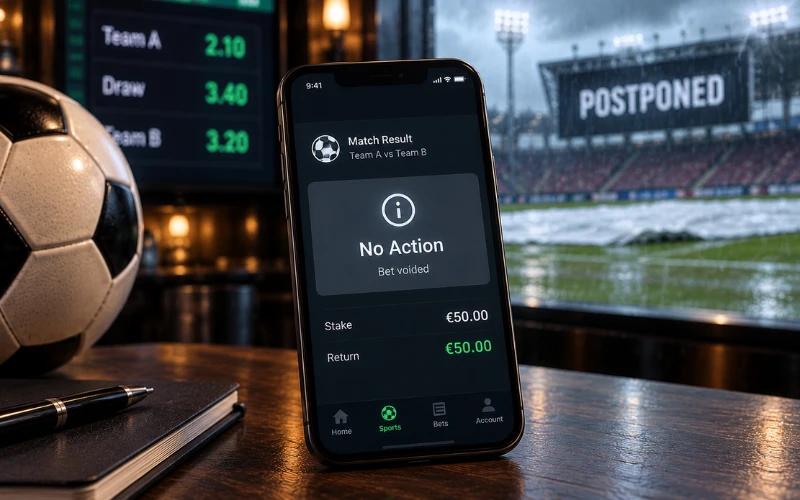
No action means a bet is voided, usually because the event was postponed, cancelled, or didn’t meet the conditions required for the bet to stand. When a bet is graded no action, the full stake is returned with no win or loss recorded.
What is a Dead Heat?
A dead heat occurs when two or more competitors finish tied for a position that a bet depends on, such as first place in a race. Bookmakers typically settle dead heats by paying out a proportional fraction of the winnings to each tied selection.
What is a Void Bet?
A void bet is a wager that’s cancelled after being placed, usually because of a rule change, a selection withdrawing, or an error in the odds offered. A void bet’s stake is returned in full, and any multiples it was part of are recalculated without that selection.
What is a Sharp Bettor vs. a Square Bettor?
A sharp bettor is a skilled, often professional bettor whose wagers are informed enough to move betting lines, while a square bettor is a casual, recreational bettor who typically bets with the public and on favorites or well-known teams. Bookmakers pay close attention to sharp money because it often signals where the true value in a line lies.
What is a Betting Limit?
A betting limit is the maximum amount a bookmaker will accept on a single wager. Limits vary by sport, market, and bettor, and bookmakers often lower limits for bettors identified as sharp.
What is a Steam Move?
A steam move is a rapid, significant shift in a betting line across multiple bookmakers at once, usually triggered by a wave of sharp money hitting the market. Recreational bettors sometimes try to “follow the steam” by betting the same side once they notice the move.
What is a Circled Game?
A circled game is an event where a sportsbook has reduced its normal betting limits, usually because of uncertainty around a key factor like a player’s injury status or bad weather. It signals that the book is less confident in its own line than usual.
What does “Off the Board” Mean in Betting?
A game or market that’s off the board has been temporarily removed from betting entirely, typically due to a major uncertainty the bookmaker needs resolved, such as pending injury news, before it can safely offer odds again.
What does “Buying Points” Mean in Betting?
Buying points means paying extra odds, or vig, to move a point spread or total in your favor by half a point or more before placing a bet. It’s most common around key numbers, where shifting the line even slightly can meaningfully change a bet’s chances of winning.
What are Key Numbers in Betting?
Key numbers are the point-spread margins that final scores land on most often in a given sport, such as 3 and 7 in American football. Bookmakers price spreads and adjust vig carefully around these numbers because even small line movements across a key number significantly change a bet’s likelihood of winning.
What is a Grand Salami Bet?
A grand salami bet is a wager on the total combined number of goals or runs scored across every game on a given day’s schedule in a league, most common in hockey and baseball. It turns an entire day’s slate into a single over/under market.
What is Consensus (Public Betting Percentage)?
Consensus, or public betting percentage, shows what share of bets or tickets placed on a market are backing each side, giving a snapshot of public sentiment on a game. Bettors often compare this figure to how the betting line has actually moved to spot signs of sharp money on the other side.
What is a Bad Beat?
A bad beat describes a bet that looked certain to win for most of an event, only to lose at the very last moment, such as a spread cover blown by a meaningless late score. It’s used to describe the specific frustration of losing a bet that seemed already decided.
What is a Layoff in Betting?
A layoff is a bet a bookmaker places with another bookmaker or betting exchange to offset excess liability building up on one side of a market. It’s a risk management tool that lets bookmakers balance their books without needing to adjust their own odds.
Betting Terms Summary
Betting terminology covers a wide range of bet types, markets, strategies and bookmaker features. From simple single bets and accumulators to round robins, handicaps, racing bets, live betting and futures, each term describes a different way of placing or managing a wager.
Understanding these terms makes it easier to read betting markets, compare available options and understand how a bet is settled. The glossary also covers important concepts such as odds, implied probability, stakes, payouts, bankroll management, value betting and cashout, providing a quick reference for the language commonly used across sports betting.