2026 French Open Women’s Draw Preview
-
 Bren Gray
 -
22 May 202610 min. read

Roland-Garros is upon us, and the 128-player women’s draw is set ahead of Sunday’s first round. This is a bracket with layers to it – Svitolina’s form colliding with Swiatek’s legacy, a loaded fourth quarter, and Ostapenko wielding one of tennis’s craziest stats.
I’m going to work through every corner of the women’s draw here, with seeds, dark horses, first-week matchups and my predictions for the final weekend.
Table of content
Key Takeaways
- Svitolina – the form player on tour – is in Swiatek’s quarter.
- Sabalenka-Gauff semifinal projected (a rematch of last year’s final).
- Ostapenko’s vs Swiatek looms in round three.
- Anisimova’s wrist injury leaves quarter two wide open.
- Loaded fourth quarter: Rybakina, Andreeva, Muchova and Paolini all in the same section.
Women’s French Open 2026 Draw: Quarter-by-Quarter Analysis
Here’s my quarter-by-quarter breakdown of the Women’s French Open.
Quarter One
In the first quarter, we can highlight:
Seeds
- Aryna Sabalenka (1)
- Jessica Pegula (5)
- Victoria Mboko (9)
- Naomi Osaka (16)
- Iva Jovic (17)
- Madison Keys (19)
- Diana Shnaider (25)
- Carolina Bucsa (31)
Dark horses
- Emma Navarro
- Donna Vekic
- Daria Kasatkina
Early matches to watch
- Jovic vs Alexandra Eala
Quarter-final prediction: Sabalenka to beat Mboko
The first quarter belongs to Sabalenka. What’s interesting about her section, though, is less about the top seed’s path and more about who makes it through the bottom half to meet her.
Mboko is the name I’m watching. The Canadian ninth seed has been one of the breakthroughs of the 2026 season, reaching the quarterfinals at three of four WTA 1000 events and climbing into the top 10 with an aggressive, front-foot game that doesn’t change regardless of who’s on the other side of the net.
She plays with a fearlessness that could cause problems in a quarterfinal against Sabalenka – a willingness to trade power with the world No 1 rather than sit back and absorb.
Standing between Mboko and that quarterfinal is likely Pegula, who’s seeded fifth but has never been past the last eight here. Clay is her weakest surface for tennis game by some distance.
Keys could also factor in from the 19th seed – the 2025 Australian Open champion is capable of turning it on at any major – but I’d be surprised to see her put together four good matches on clay right now.
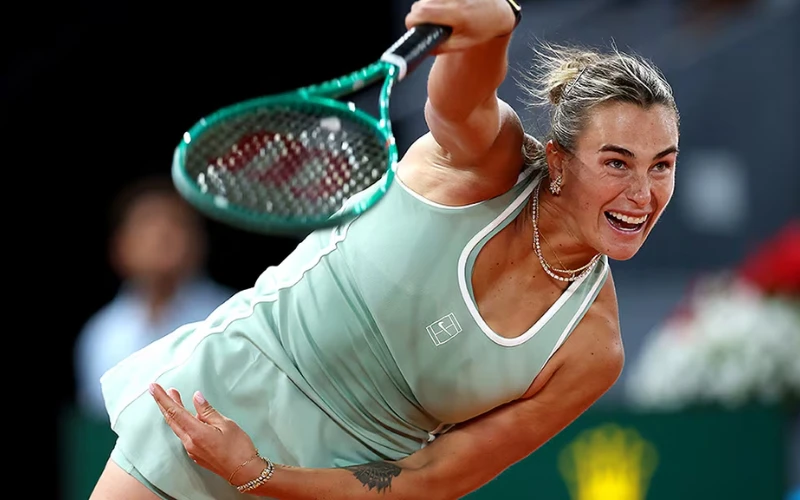
Sabalenka’s own path is manageable. Jessica Bouzas Maneiro, then a qualifier or Elsa Jacquemot, and Kasatkina or Navarro in the third round. She went 15-4 on the European clay swing last year and clearly knows how to weaponize her game on this surface.
That said, her 2026 clay form hasn’t been airtight – a quarterfinal loss in Madrid, then Sorana Cirstea beat her in the Rome third round, ending a 17-match quarterfinal streak. I still think she cruises through the first week.
Jovic vs Eala is a fun opening match. Two teenagers with serious talent, and both will have ambitions beyond just the first round. Jovic’s fourth-round run at the Australian Open this year tips it in her favor for me.
Quarter Two
In the second quarter, we can highlight:
Seeds
- Coco Gauff (4)
- Amanda Anisimova (6)
- Linda Noskova (12)
- Ekaterina Alexandrova (14)
- Anna Kalinskaya (22)
- Elise Mertens (23)
- Anastasia Potapova (28)
- Ann Li (30)
Dark horses
- Qinwen Zheng
- Katie Boulter
- Maria Sakkari
Early matches to watch
- Noskova vs Sakkari
- Gauff vs Taylor Townsend
Quarter-final prediction: Gauff to beat Zheng
The big story in quarter two isn’t Gauff – she’ll be fine. The story is the gap that Anisimova’s injury has left in the bottom of this section and who’s going to fill it.
Anisimova is the sixth seed but hasn’t played a competitive match since March. A left wrist injury forced her out of Charleston, Madrid and Rome, and she arrived in Paris without a single clay match this year.
She was spotted on Philippe-Chatrier earlier this week with her wrist still taped. Even if she takes the court, the idea that she’ll win four matches after a two-month layoff is optimistic. I’d expect her to be out by the third round at the latest.
That opens the door for Zheng. The Chinese player is unseeded, but her Paris record is excellent – 10-4 in her career, with a quarterfinal last year and Olympic gold on this clay in 2024.
She’s got the game to exploit an open section, and if Anisimova falls early and Noskova or Sakkari handles the lower half, Zheng could come through to face Gauff in the quarters. That’s a dangerous matchup for the defending champion.
Boulter has had a solid clay swing and could be a factor too, though I’m less convinced she’ll sustain it through a full Grand Slam week.
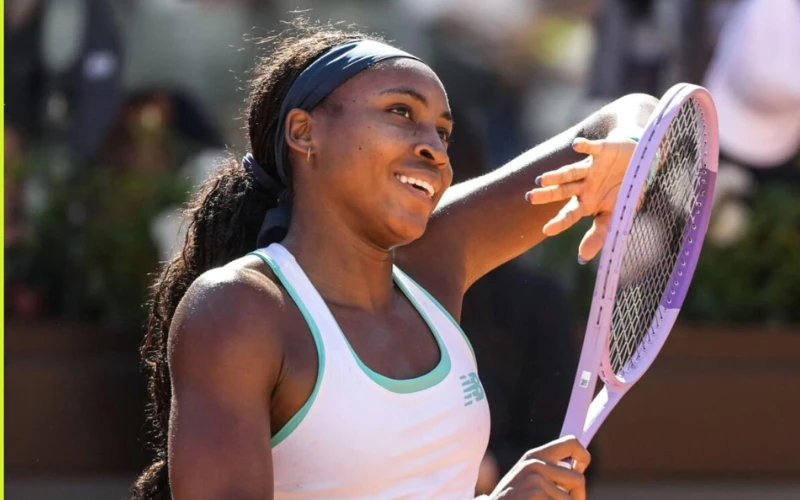
Gauff herself comes in with form. She got to the Rome final, beating Andreeva and Cirstea before losing to Svitolina in three. Her opening matches – Townsend, then Dalma Galfi or a qualifier – shouldn’t trouble her.
Potapova in round three is her first real test. The Russian was a Madrid semifinalist as a lucky loser and made the Rome fourth round as a qualifier, so she’s playing well, but Gauff’s defense should neutralize her.
I’ve got Gauff coming through with Zheng from the bottom half, in what could be one of the better quarterfinal matchups of the tournament of tennis.
Quarter Three
In the third quarter, we can highlight:
Seeds
- Iga Swiatek (3)
- Elina Svitolina (7)
- Belinda Bencic (11)
- Marta Kostyuk (15)
- Sorana Cirstea (18)
- Clara Tauson (21)
- Leylah Fernandez (24)
- Jelena Ostapenko (29)
Dark horses
- Sofia Kenin
- Lilli Tagger
Early matches to watch
- Ostapenko vs Seidel
- Cirstea vs Efremova
Quarter-final prediction: Svitolina to beat Swiatek
I’m going to make a call here that’ll undeniably get a bit of pushback: I’m picking Svitolina over Swiatek in this quarter.
There’s sound reason behind this tip, though. Elina Svitolina just won Rome by beating Rybakina, Swiatek and Gauff in consecutive matches. She’s 8-0 in clay-court finals across her career. She’s also 3-0 against Gauff this year and has won her last three meetings with Swiatek, including that 6-4, 2-6, 6-2 semifinal in Rome.
Since coming back from maternity leave in 2023, the Ukrainian has rebuilt herself into a top-10 player at 31. This is the best tennis she’s played in years, possibly ever on clay.
The counterargument is obvious – she’s never been past the quarterfinals in Paris. But she’s also never arrived here playing at this level, with three wins over the woman she’d likely face in the quarters. I think this is the year she finally gets past that barrier.
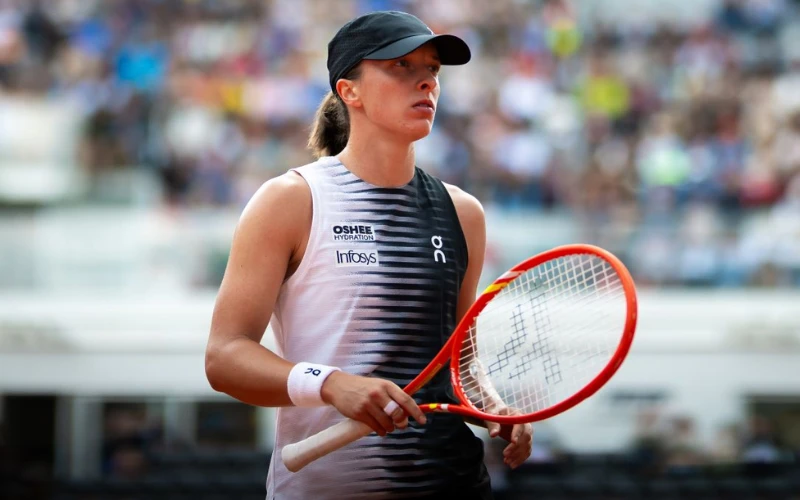
As for Swiatek, my concern isn’t just her form dip (no titles in 2026, a retirement in Madrid, 50 unforced errors in her Rome loss). It’s that she might not even get to the quarterfinal.
Ostapenko lurks in her section, with their head-to-head sitting at 6-0 in the Latvian’s favor. Their most recent clash was in Stuttgart in April, on clay, and Ostapenko won 6-3, 3-6, 6-2. The 2017 Roland-Garros champion’s flat, take-it-early style dominates Swiatek’s topspin game.
Swiatek will be praying Ostapenko crashes out before round three, which is always a possibility. But if that match happens, I reckon it’ll mess up a few analysts’ brackets.
Beyond that, Cirstea in the fourth round is another obstacle for Swiatek. The Romanian is 36 and in her farewell season, but she beat Sabalenka in Rome and reached the semifinals in Rouen. She’d love nothing more than a deep run in her final Roland-Garros.
I’m taking Svitolina to get through the upper section – her opening rounds are comfortable – and then to beat whatever version of Swiatek comes out of that gauntlet, if she emerges at all.
Quarter Four
In the fourth quarter, we can highlight:
Seeds
- Elena Rybakina (2)
- Mirra Andreeva (8)
- Karolina Muchova (10)
- Jasmine Paolini (13)
- Liudmila Samsonova (20)
- Hailey Baptiste (26)
- Marie Bouzkova (27)
- Xinyu Wang (32)
Dark horses
- Barbora Krejcikova
- Emma Raducanu
Early matches to watch
- Andreeva vs Fiona Ferro
- Muchova vs Anastasia Zakharova
- Baptiste vs Krejcikova
Quarter-final prediction: Rybakina to beat Muchova
Quarter four is packed. Three of the 10 players I’d fancy to make the second week at any Grand Slam are crammed into the same section. Somebody very good is going home early.
Muchova is the player who’d give me the most pause if I were Rybakina. The Czech made the Roland-Garros final in 2023 and has been in strong form this year – she won Doha for her biggest career title, made the semifinals in Brisbane and Miami, and her 18-4 record going into the clay swing had her fifth in the Race to Riyadh.
She’s got the shot-making and variety to unravel anyone on clay, and when she’s healthy, there’s an argument she’s the most talented ball-striker in the women’s game.
The problem with Muchova is always the same: her body. She missed most of the 2025 clay season through injury, and you never quite know whether she can hold together across seven matches in two weeks. Her draw is tricky too – Zakharova first, then likely Bouzkova, before a potential fourth-round collision with Andreeva. That’s a brutal path just to reach the quarters.
Then there’s Andreeva, who’s still just 19 and already has two WTA 1000 titles. She reached the Madrid final this year, losing to Kostyuk. Her clay game has a variety that you rarely see from someone her age – she can mix pace, change direction and hit shots other players wouldn’t attempt.
A Muchova-Andreeva fourth round would be one of the best matches of the first week.
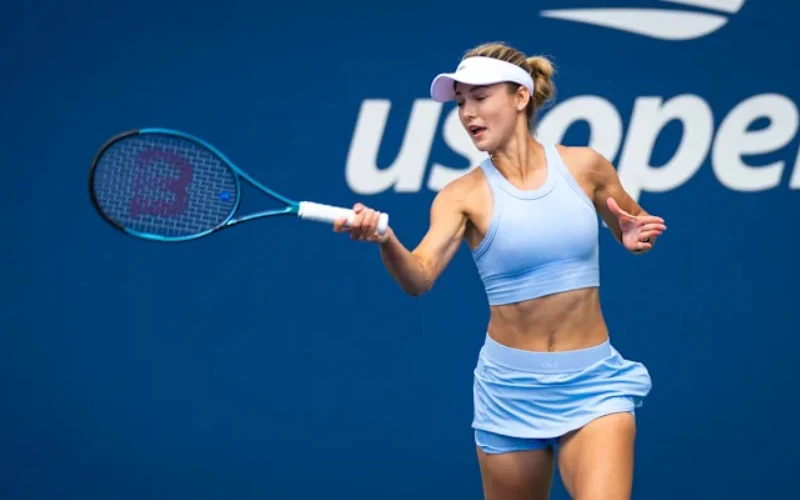
Rybakina sits at the other end of this quarter and has the most straightforward path. The Kazakh won the Australian Open in January, won Stuttgart on clay last month, and leads the Race to the Finals.
What’s changed with her on clay isn’t the power – that’s always been there. It’s the footwork. She’s moving better than at any point in her career and can construct points on this surface rather than just blast through them.
Veronika Erjavec first, then a qualifier, with Baptiste a possible third-round test. Paolini – last year’s semifinalist and 2025 Rome champion – is the likely fourth-round opponent, though her 2026 has been quieter.
Don’t sleep on Krejcikova either. The 2021 champion is unseeded after injury, but she’s won this thing before without a seeding. She draws Baptiste in round one, and stranger outcomes have happened in this quarter of the draw.
I’ve got Rybakina and Muchova meeting in the quarters, with Rybakina’s power and consistency just enough to edge her through.
Final Weekend Predictions for the Roland-Garros Women’s Event
Semi – Sabalenka beats Gauff
Semi – Svitolina beats Rybakina
Final – Sabalenka beats Svitolina
I’m picking Sabalenka to win the title, but via a different route than best bookies and seeding would indicate.
In the top half, a Sabalenka-Gauff semifinal would be a rematch of last year’s final. Gauff won that one 6-7, 6-2, 6-4, but Sabalenka avenged it in the Miami final earlier this year. On clay, Gauff is exceptional defensively and will make Sabalenka work for every point. But the Belarusian’s serve is a weapon that becomes even more effective when Gauff’s return game is slightly blunted by the slower surface.
I think Sabalenka gets through again.
The bottom semi is where this prediction gets interesting. Svitolina over Swiatek in the quarters means I’ve got the Ukrainian meeting Rybakina in the semis. Svitolina has already beaten Rybakina on this clay swing – in the Rome quarterfinals – and the defensive game she’s been playing right now is exactly what you want on heavy clay in a best-of-three format.
Rybakina’s power is a threat, but Svitolina has shown she can absorb it and pick her spots on the counter.
A Sabalenka-Svitolina final would be No 1 vs No 7, power vs defense. If Svitolina gets there, she’ll have had to beat Swiatek, Rybakina and then Sabalenka to win the title – and I don’t think she’ll have enough left in the tank for all three.
Sabalenka’s ability to dictate on serve will be the difference, and I fancy the Belarusian to lift the trophy for the first time.
FAQ About French Open Women’s Draw
⭐ Who is the top seed in the French Open Women’s 2026?
Aryna Sabalenka is the top seed for the women’s draw.
⭐ When does the French Open Women’s 2026 start?
The tournament begins on May 18, 2026.
⭐ Who are the main contenders in the women’s draw?
Sabalenka, Rybakina, and Svitolina are the favorites.
⭐ Are there any dark horses in the women’s French Open?
Yes, players like Andreeva and Krejcikova could cause upsets.
⭐ How many sets are played in French Open Women’s matches?
All women’s matches are best of three sets.

Sports Betting Expert