Wimbledon Dark Horses 2026
-
 Written by
Bren Gray
Written by
Bren Gray -
29 Jun 202614 min. read

Both the men’s and women’s events at the 2026 Wimbledon Championships sit in the same spot: a clear favorite up top, then a pile of questions beneath. On grass – the shortest, most volatile swing of the year – that’s the perfect breeding ground for Wimbledon dark horses.
The lawns hand big servers and flat hitters a weapon that’s hard to counter, and with so little time to find form, seeds tumble early most years. If you’re like me and fancy a bit of chaos in your tennis, this is the draw to dig into.
Read on for my five 2026 Wimbledon dark horses in each singles event with the game to make a deep run at SW19.
Table of content
Key Takeaways
- Sinner is the favorite in the men’s draw at Wimbledon
- Berrettini is well-suited to grass courts and offers good odds
- Mensik is a dangerous player thanks to his powerful serve
- Musetti’s form has been inconsistent, but he has potential
- Bencic is the most well-rounded dark horse in the women’s draw
- Ostapenko and Krejcikova are fast, technically skilled players
2026 Men’s Wimbledon Dark Horses
There’s no getting around it – Jannik Sinner is the heavy favorite to defend his title, and I tipped him to do exactly that in my prediction piece. But the field behind him is thin and unproven on grass, and the surface makes this anyone’s game.
That’s exactly where a dark horse can do damage. Last year alone, both Alexander Zverev and Daniil Medvedev went out in the first round at SW19 – proof of how fast the form book gets thrown out the window on these tennis courts. These are the five who could surprise.
Matteo Berrettini
If you’re hunting a grass dark horse at good odds but with a resume to inspire confidence, start with Berrettini. The Italian is a former Wimbledon finalist, beaten only by Novak Djokovic in the 2021 title match, and a Queen’s champion to boot. His game might be the best-suited to the surface of anyone on this list.
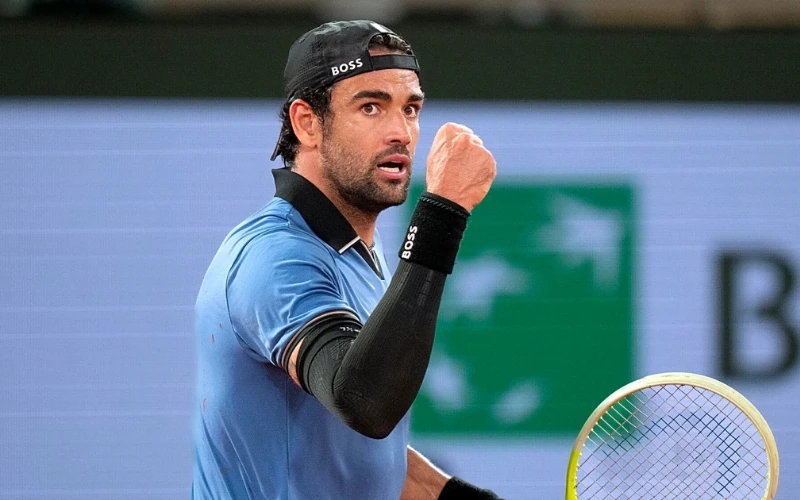
It’s all built around that huge, flat forehand and a hammer of a serve – two shots that stay low and skid through on grass. Add a slice that shields his backhand and lets him move forward, and you’ve got a player who turns weaknesses on slower surfaces into strengths on the lawn.
His numbers say the same: a 42-12 career grass record at a 78% clip, the best on this list bar none. When he’s right, he’s an elite grass tennis server – the type who holds for a fortnight and needs just one break a set to win matches.
Berrettini’s level is still there when his body allows, too. He reached the quarter-finals at Roland-Garros this year before an injury forced him out mid-match – and that was on clay, not his best surface. Move him to grass, where the serve-forehand combination does maximum damage, and his ceiling climbs.
The catch, as ever with Berrettini, is fitness. Last season the Italian played just one grass match, and so far in 2026, he’s yet to play on the surface, thanks to that injury in Paris. However, if there’s one guy that excels at returning from injury and hitting the ground running, it’s Berrettini – he’s got plenty of experience doing so, after all.
He’ll be an unseeded floater, having just snuck into the main draw entry list. But with big odds of 50.00 at most bookies, I like a small bet on him going deep.
Jakub Mensik
If you want a pure high-ceiling pick, Mensik is your man. Heading into the grass season the young Czech sat at 23-10 for the year, and he already owns a scalp few can brag about – he’s one of only two men to beat Sinner in 2026.
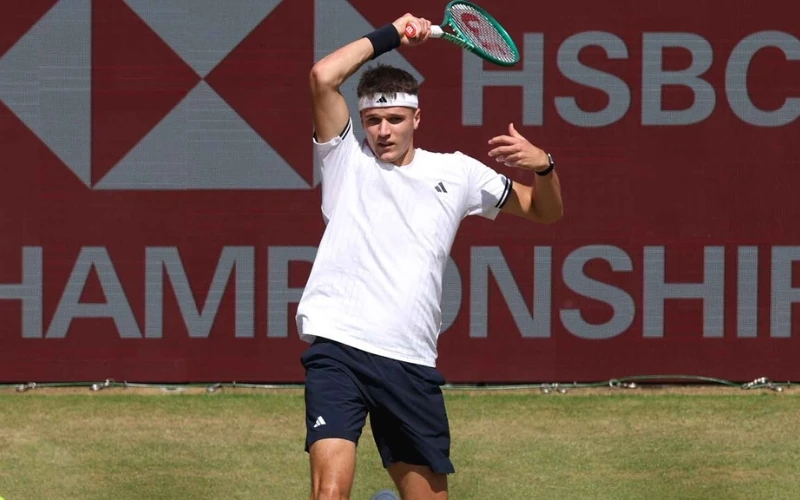
He’s not all projection, either. Mensik already has a Masters 1000 title to his name, won in Miami last year, where he beat Djokovic in the final on the back of that enormous serve. A delivery that wins big titles on hard courts only gets more dangerous when the grass speeds it up.
The wider case for Mensik is simple. His serve is the single most valuable weapon on this surface, and his is elite – free points, short holds, no rhythm for the returner. He’s still green on grass (no pun intended), with a third round his best at SW19 and a thin record to date, so this is a projection more than a proven track record.
But that’s the dark-horse game. That serve alone keeps him in every match, and on a fast court it can carry a young player a long way before the draw catches up with him.
There’s been little to write home about for Mensik this grass swing – just one match played, at Queen’s, where he went out in a third-set breaker to veteran Adrian Mannarino. But if he strings together a few wins early at Wimbledon, don’t discount him making the final weekend. Particularly with sports bookies odds of 35.00.
Frances Tiafoe
Tiafoe wasn’t on my radar too heavily this time last month, despite making a handy run to the fourth round in Paris.
But the American has well and truly forced his way into the Wimbledon dark horse conversation over the past fortnight. He’s 7-1 on the grass this month, with a quarter-final in Stuttgart (lost to Jiri Lehecka – more on him below) then a title in Halle, beating three top-10 players.
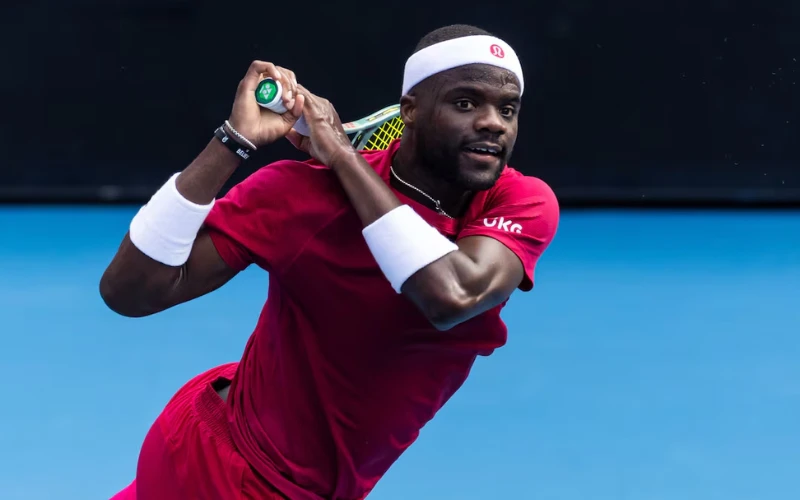
Naturally, Tiafoe has an excellent grass game. His serve is strong, and he slaps the forehand nice and flat. But it’s what the surface does for his backhand that I love – it turns a weakness into a real strength, as he can slice much more and hit a good flat ball. I also like how much he’s improved his movement on grass, part of an overall upswing in the 28-year-old’s athleticism this year.
The fact that Tiafoe has just beaten three top-10 players in one tournament is an excellent sign too. He’d lost eight straight matches against top-10 opponents before last week, dating back to the 2024 US Open. With that monkey off his back, I love a bet on Big Foe at 35.00.
Jiri Lehecka
Lehecka is the sleeper of this list – and the one I’d least want to draw if I were a top seed.
The Czech put together the best grass return of any of these names last year, going 7-3 on the surface in 2025, and he came into the grass swing at 17-10 for the season. A top-10 player on his day, he’s got more upside than his price implies.
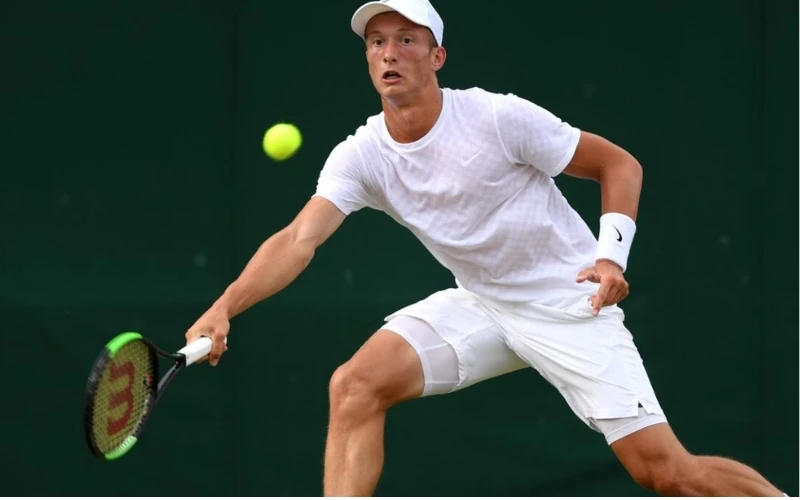
He’s backed things up so far this grass swing. While he doesn’t have the flashy results of someone like Tiafoe, he did beat the American in Stuttgart en route to the semi-finals, where he lost to eventual champion Ben Shelton in a triple-tiebreak epic. He also bagged an opening win in Queen’s, taking him to 3-2 for the grass season. Nothing amazing, but at least he’s heading to Wimbledon with matches under his belt.
His grass case is straightforward. Lehecka’s ball-striking is flat and heavy, he takes time away early, and the low bounce rewards exactly that – there’s no wind-up for opponents to read. Back it with a serve that holds up under pressure and you’ve got a dangerous player.
A round-of-16 showing is already on his SW19 record, and he’s reached a Grand Slam quarter-final on hard courts, so the deep end of a major isn’t alien to him.
The reason he’s not considered a favorite is his resume. He’s never gone truly deep at a major, and he can run hot and cold. But the raw materials are all there, and he’s got recent grass form better than most of the seeds above him. At around 75.00, Lehecka is the sharpest dark horse pick at Wimbledon this year.
Flavio Cobolli
Cobolli is the in-form name here, fresh off the run of his life last month. He took Zverev to five sets in the Roland-Garros final – his maiden Grand Slam final – and came into the grass season at 23-13 for the year.
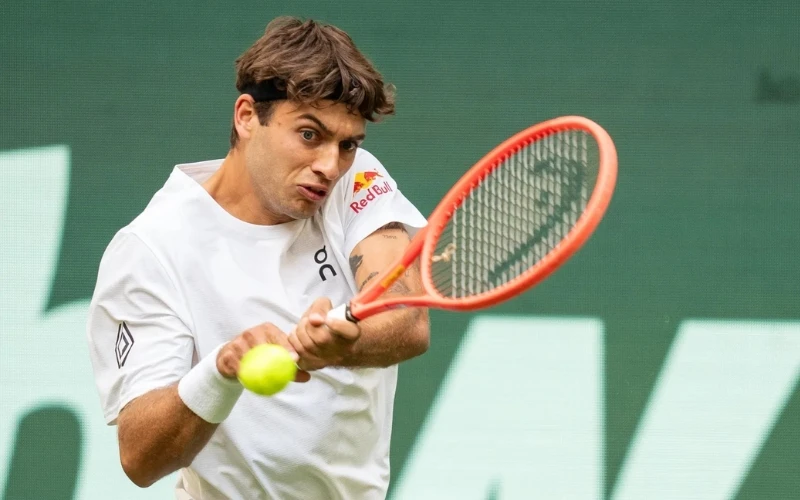
It’s easy to forget he’s no stranger to grass, either. Last year he made the quarter-finals at both Halle and Wimbledon, so this isn’t a clay specialist parachuting onto a foreign surface – there’s a SW19 quarter-final on his CV at just 24. His natural speed and clean ball-striking already translate well to the lawns, even off a slim 9-8 grass record.
His form behind the Paris run backs it up. This season he’s lifted an ATP 500 title in Acapulco and gone deep in Munich and Madrid, beating the likes of Tiafoe and Zverev along the way. Big names don’t faze Cobolli.
The caveat is the obvious one: backing up a deep Slam run a few weeks later, on a different surface, is a tall order, and the legs may be heavy. That showed in his one grass outing this month, where he lost in straight sets to Tiafoe in Halle.
But confidence is fuel, and Cobolli has a tank full of it. Everyone can see he’s on the verge of a breakthrough, and at a generous 100.00, the leap from dark horse to contender is well worth a small punt.
2026 Women’s Wimbledon Dark Horses
The women’s draw is wider open still. Aryna Sabalenka heads the market but has never been past the Wimbledon semis, Iga Swiatek arrives off a light grass build-up, and the chasing pack is a muddle of form and fitness questions.
Grass has thrown up surprise runs on the women’s side for years now, and there’s no reason to think 2026 is any different – an unseeded or unfancied name reaching the second week is nearer the rule than the exception on these lawns. These are the five Wimbledon dark horses who could seize the opening.
Belinda Bencic
Of everyone here, Bencic has the cleanest mix of grass pedigree and form, which makes her the shortest-priced of the women’s bunch.
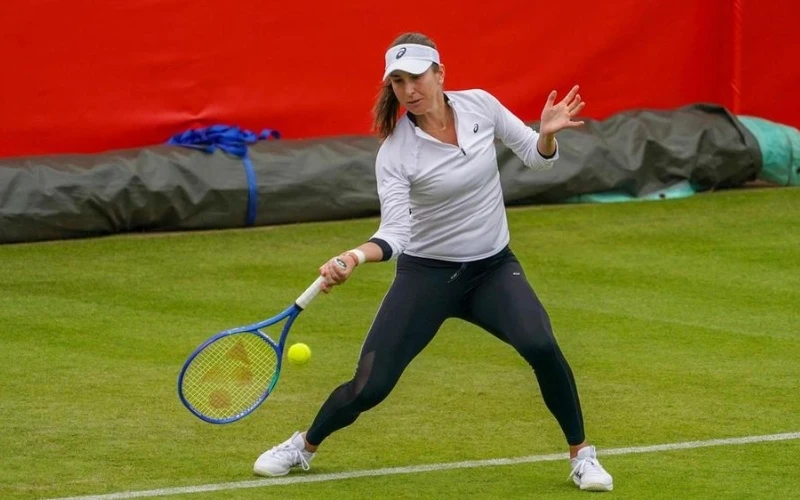
The Swiss owns a 54-25 (68%) career grass record and a Wimbledon semi-final, so the surface has long suited her.
Her comeback is exciting: back competing after time away from the tour, she rebuilt at pace and came into the grass season at 21-6, with wins over Swiatek, Anisimova and Shnaider – three of the world’s best, not flattering-draw filler. She also went 5-2 on grass last year on that return, so her surface form has already held up.
Bencic’s game plays out beautifully on grass. She takes the ball early off both wings, moves cleanly, and doesn’t give away free points – precision that matters as much as power on a fast court.
The primary concern with Bencic is a lack of grass matches this year. She was set to compete at both Queen’s and Berlin, but had to withdraw from both due to a right ankle injury. However, she’s described the injury as minor, so here’s hoping her withdrawal is just precautionary, and actually lets her recharge after a busy season. I still like her price of 35.00
Donna Vekic
Vekic is proof that grass brings the best out of players the rankings overlook. The Croatian made the Wimbledon semi-finals in 2024, the run of her career, and owns a 61-39 record on the surface.
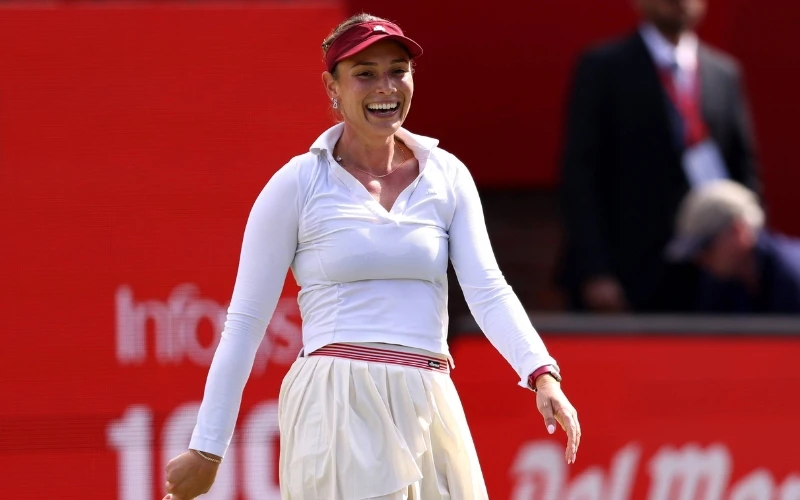
That 61% rate comes across 100 tour-level grass matches, so this is craft built over years rather than a fluke fortnight. Her game is built for quick courts – a big serve, flat groundstrokes, and the kind of first-strike power that’s rewarded when the ball stays low. When she’s dialled in, she can trouble anyone over best-of-five.
She came into the grass season at 12-11 for the year, the form has been patchy, and her 2025 grass swing was a disappointing 2-4. This is a player who needs momentum – and that’s exactly what she’s got this month. A lucky loser entrance to Queen’s resulted in her going on an incredible run to win five in a row and take out the title, losing just one set along the way..
A semi-finalist from two years ago, off the back of a fresh grass court title – this price is the sort of each-way value dark horse hunting is all about, off the back of a fresh grass court title – around 50.00 with most tennis books.
Jelena Ostapenko
You can’t write a grass dark horse list without the most fearless ball-striker in the game.
Ostapenko announced herself by winning Roland-Garros as an unseeded 20-year-old, and that hit-through-anything style has never left her. Grass suits it better than clay ever did – the points are shorter, the bounce is lower, and there’s no time for opponents to dig her flat missiles out.
Her 68% career grass rate and a Wimbledon semi-final are the proof on the surface.
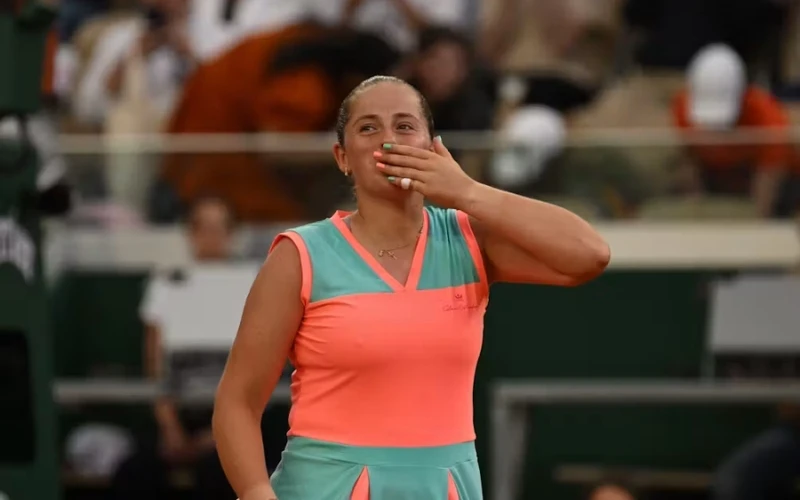
She owns a perfect 6-0 head-to-head against Swiatek – nobody else with three or more meetings holds a clean record against the Pole – and she’s beaten both Sabalenka and Gauff. When she connects, the very best in the world can’t live with the pace.
The flip side is her error count, which is why she came into the grass season at 16-13 rather than 26-3. She’s the definition of high-variance: 40 winners one match, 40 errors the next. Or both in the same match.
But variance is exactly what you want from a dark horse. Hand her a soft opening week and a hot start, and Ostapenko can tear through a half of the draw – just as she’s done before. At around 50.00, she’s a genuine outsider with the ceiling to justify a small punt.
Jasmine Paolini
Like Vekic, Paolini is a recent Wimbledon success story trading at a dark horse price. And her pedigree runs deeper than one good fortnight: the Italian reached back-to-back Grand Slam finals in 2024, at Roland-Garros and then Wimbledon, climbing into the world’s top five on the back of it. That’s elite-level form, not a one-off.
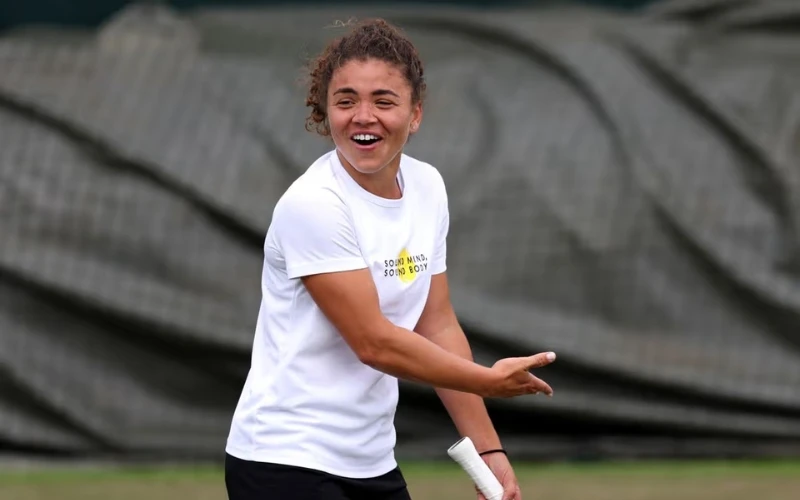
She’s a compact, relentless mover who takes the ball early and competes hard on every point – a style that works on grass better than her career numbers suggest.
To be fair, she hasn’t kicked on from that 2024 peak. Her grass record sits at 14-15 (48%), she went 3-3 on the surface last year, and she came into the grass season at 12-11 for the campaign. She’s had little time on the surface so far this year, losing her only match in Eastbourne this week.
But a major finalist’s nerve doesn’t evaporate in 18 months, and in a wide-open draw it only takes a hot fortnight to rekindle it. At around 75.00, a former Wimbledon finalist is too big to ignore for a small play.
Barbora Krejcikova
Here’s my real wildcard: the woman who won this title just two years ago.
Krejcikova took the 2024 Wimbledon crown somewhat out of nowhere, beating Paolini in the final, and she’s a two-time Grand Slam champion all told – she also won Roland-Garros back in 2021. Her big-stage nerve is proven beyond doubt.
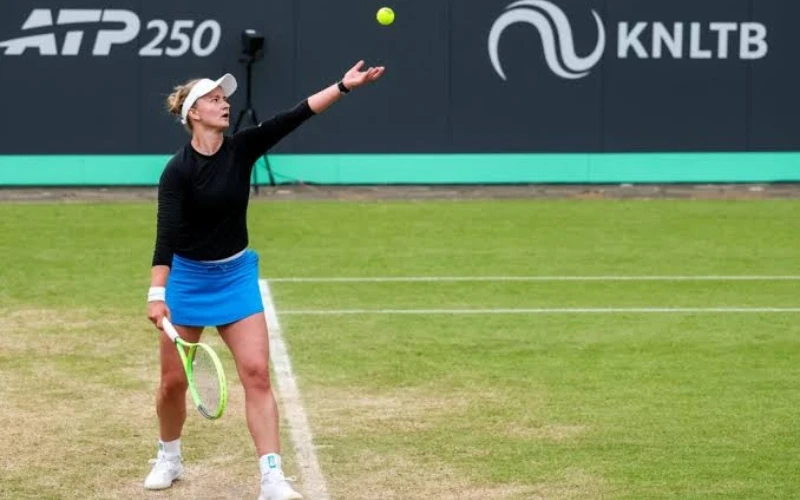
Her game is built for the surface, too. She’s a crafty all-courter with a biting slice, soft hands and the variety to unsettle the big hitters – and that variety bites harder on a low, skiddy court than it does on a slow one, where rhythm hitters get comfortable.
She read the lawns beautifully on that title run, mixing slice and touch to take the pace off the bigger ball-strikers. Outside it she’s no mug on grass either, at 28-14 (67%) for her career.
She came into the grass season at just 9-6 for the year and has spent long stretches sidelined, but quickly showed the tour why she’s so dangerous, powering her way to the s Hertogenbosch final. She did have to forfeit the final due to a respiratory illness, but was back on court this week, albeit in an opening loss in Eastbourne.
But champions know how to win where they’ve done it before. If she clicks into gear and the body holds, that slice-and-dice game can frustrate a draw full of power players all over again. At around 75.00, I fancy a small bet.
Wimbledon Dark Horses Summary
At the 2026 Wimbledon, both the men’s and women’s tournaments are wide open, and the Wimbledon dark horses could cause some major upsets.
Berrettini, Mensik, Musetti, Bencic, and Ostapenko all have what it takes to go deep in the tournament. For bettors looking to place successful bets, it’s worth searching Wimbledon predictions and checking out the best bookmakers, where competitive odds and a wide range of markets are available.
FAQ About Wimbledon Dark Horses
⭐ Who are the men's 2026 Wimbledon dark horses?
Matteo Berrettini, Jakub Mensik, and Lorenzo Musetti.
⭐ Which female player is the most promising dark horse?
Belinda Bencic, Donna Vekic, and Jelena Ostapenko.
⭐ Why is a grass track better for Wimbledon dark horses?
Their fast rallies and flat shots give Wimbledon dark horses a chance.
⭐ Which Wimbledon dark horses are worth betting on at high odds?
Musetti, Lehecka, and Cobolli all show great potential.
⭐ Can betting on Wimbledon dark horses be profitable?
Yes, if Wimbledon dark horses outperform expectations, it can offer high odds.

Sports Betting Expert