Australian Open 2026 Preview
-
 Dalius Mikalauskas
 -
09 Jan 20264 min. read

The Australian Open 2026 will take place from January 12 to February 1 in Melbourne, once again launching the Grand Slam season on hard courts at Melbourne Park. As the first major of the year, it traditionally raises questions around form, fitness, and readiness after the off-season.
With the broader context of Melbourne’s conditions in mind, we break down the outright markets and key contenders in our Australian Open 2026 predictions.
This Australian Open preview looks beyond schedule and draws to focus on what the Australian Open truly rewards in modern conditions. Melbourne is often labelled as a fast hard-court Slam, but recent editions suggest the challenge runs deeper. Early rounds frequently expose hesitation, physical vulnerability, and tactical uncertainty sooner than at other majors.
Rather than allowing players to ease into the tournament, Melbourne has increasingly punished slow starts and inefficient patterns. Long early matches, especially in the men’s draw, have repeatedly shaped how deep players can go later in the fortnight.
Understanding these dynamics is key when evaluating contenders for Australian Open 2026 – not just based on reputation, but on how efficiently they navigate the opening stages.
Table of content
Key Takeaways
- Australian Open 2026 places strong emphasis on efficient early-round performance.
- Melbourne’s hard courts reward early ball striking and controlled aggression.
- In the men’s draw, players who balance aggression with efficiency tend to progress deeper.
- Early rounds often produce instability due to uneven match readiness at the start of the season.
- In the women’s draw, confidence and first-strike execution frequently shape momentum.
- Australian Open outcomes are often influenced earlier than at other Grand Slams.
ATP Outlook: Controlled Aggression Matters More Than Power
From the men’s side, Melbourne rarely rewards extremes. Pure attackers are often drawn into errors, while overly passive defenders tend to get pushed too far behind the baseline.
What consistently works in these conditions is controlled aggression – players willing to step inside the court and shorten rallies without forcing low-percentage shots.
Jannik Sinner fits this profile well. Over the past 2 seasons, his ability to take time away from opponents while maintaining efficiency has translated effectively to Melbourne’s hard courts.
Carlos Alcaraz presents a more nuanced case. Talent has never been in question, but in Melbourne, particularly during the opening rounds, explosive athleticism alone does not always shield players from long, physically demanding matches. Efficiency, rather than pure brilliance, is likely to play a decisive role in determining how far he progresses in 2026.

The tennis courts themselves play a significant role in shaping these outcomes. They are not lightning-fast, yet they consistently reward players who take the ball early. Returning from too deep allows opponents time to dictate rallies, and this subtle tactical detail has influenced numerous matches here more than raw shot-making alone.
Lower-ranked Australian Open 2026 players are well aware of this dynamic, which is why the opening week in Melbourne often feels unstable. In recent editions, players outside the top tier have capitalised on early uncertainty, using tactical clarity and match readiness to disrupt the draw.
Dark horses tend to thrive at the Australian Open not because favourites lack quality, but because uncertainty is highest at the start of the season. Some players arrive match-fit and tactically settled, while others are still searching for rhythm – a gap that Melbourne’s conditions are quick to expose.
WTA Outlook: Confidence Travels Faster Than Reputation
On the women’s side, the pattern is slightly different, but just as unforgiving.
Melbourne does not wait for players to “grow into” the tournament. Service games are tested immediately, and confidence – or lack of it – becomes visible very quickly. Watching recent editions, it’s hard to ignore how often early control of matches defines entire runs.
Aryna Sabalenka’s recent success here was built on serve dominance and first-strike intent. Once that foundation is there, Melbourne becomes far more manageable.
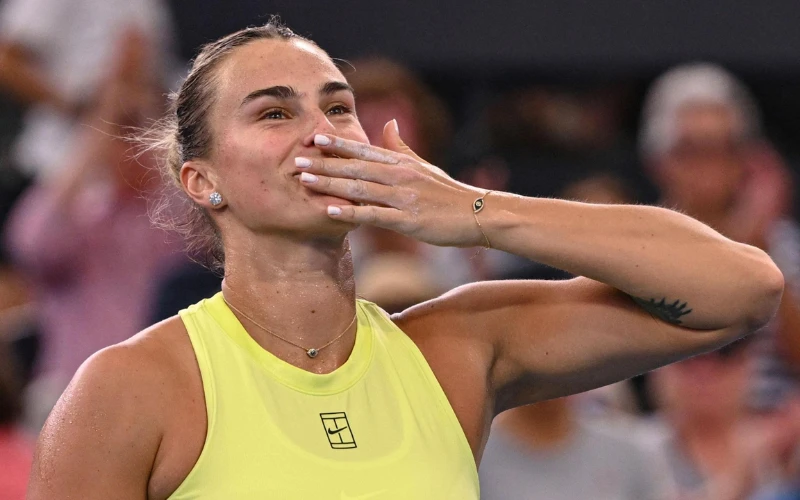
Iga Świątek’s game, by contrast, sometimes requires more rhythm. That doesn’t mean she can’t win here – she clearly can – but Melbourne challenges her patterns more than slower majors do.
Coco Gauff’s improved serve over the past hard-court seasons is one reason she feels increasingly comfortable under these conditions. Small changes matter here.
Why Australian Open 2026 Will Be Decided Early
Australian Open 2026 is likely to be shaped earlier than many other Grand Slam tournaments. Not because favourites lack quality, but because margins in Melbourne are consistently narrow and early mistakes carry lasting consequences.
A single extended five-set match in the opening week can alter an entire tournament trajectory. Physical load, recovery demands, and accumulated stress rarely disappear as the rounds progress. This pattern has repeated often enough in Melbourne to be treated as a structural feature rather than coincidence.
This does not suggest unpredictability for its own sake. Instead, it highlights how preparation and efficiency tend to outweigh reputation during the first stages of the tournament. Players who navigate the opening rounds with minimal physical and emotional cost consistently position themselves better for the second week.
Early indicators matter more here than headline results. Straight-set wins in week one, short service games, and controlled body language in extreme heat often provide clearer signals than draw position or ranking alone. These early signs are vital for anyone using sports betting sites to track potential winners.
Melbourne rarely disguises its demands. Players either meet them early in the tournament or face the consequences later, when accumulated fatigue and pressure become impossible to manage.
Melbourne rarely hides what it wants from players. You either give it early – or it takes it from you later.
FAQ About Australian Open 2026
⭐ What is the Australian Open 2026 schedule?
The Australian Open 2026 dates will include matches from January 12 to February 1 in Melbourne, Australia.
⭐ Why do early rounds matter so much in Melbourne?
Extended matches in the opening week can have lasting physical and tactical effects later in the tournament.
⭐ What playing styles work best in Melbourne?
Players who combine early aggression with efficiency tend to be most effective on Melbourne’s hard courts.
⭐ Why do early upsets occur at the Australian Open 2026?
Early-season uncertainty and differences in preparation levels are often exposed quickly.
⭐ What should fans watch for in the first week?
Straight-set wins, efficient service games, and composure in heat conditions.

Crypto and Sports Betting Expert